
Appointment, call, contact, and emergency-care paths that are visible on public pages
Dentists
Find dental website leaks before patients miss the appointment path.
Dental practice websites often depend on office edits, booking widgets, and review tools. A page can still look current while the phone number is hard to tap, the appointment button points to an old scheduler, or a mobile visitor cannot find a clear contact path. This page explains the customer path checks SiteLeak runs for dental practices and how to use the report as a practical website maintenance list.
Want to see the report first?View dental sample report
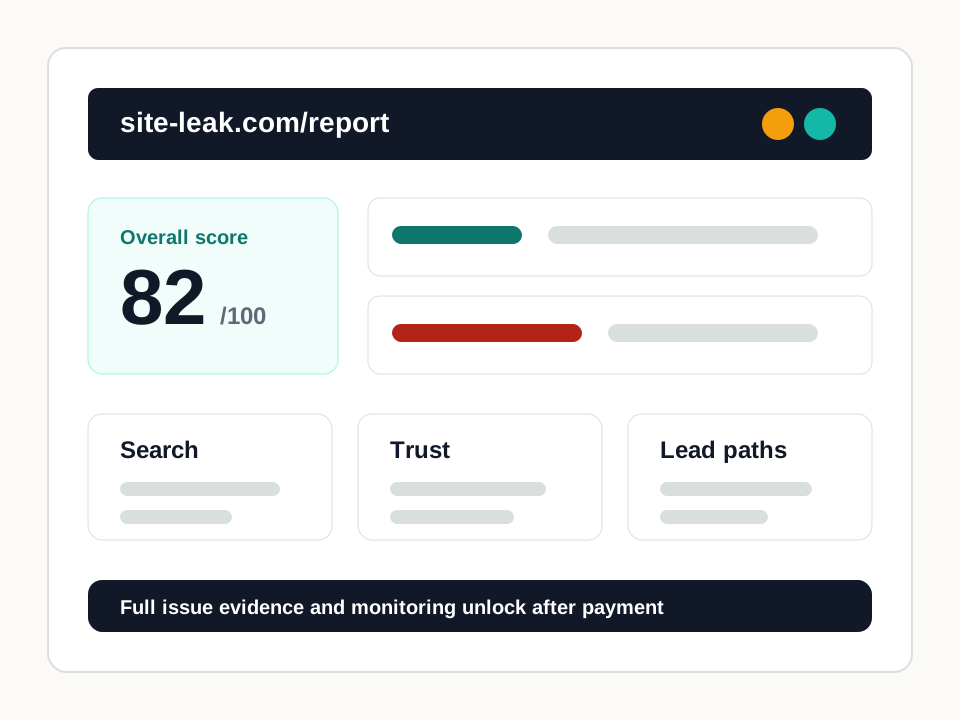
Pages and actions this check reviews
Broken same-domain appointment, service, insurance, and location links sampled from the homepage
Contact-form signals such as submit actions, contact fields, disabled buttons, and required-field labels
Mobile first-screen CTA evidence when public evidence supports it
Trust-path signals such as visible phone numbers, privacy links, review cues, and secure-page asset hints
Why dental websites miss appointment requests
Patients usually arrive with a simple job: call, book, check insurance, find a location, or ask a question. If any of those paths moves, breaks, or gets buried on mobile, the practice may not notice until appointment requests slow down.
How to use the report
Start with the highest-priority customer path findings, use the source URL and what SiteLeak found as copy-ready fix notes, then rerun the scan after the fix is live.
What to check after routine updates
Scheduler swaps, new patient forms, insurance-page edits, office-hour changes, and review-widget changes are the moments when a quick retest is most useful.
Who this page is for
Practice owners who want a quick public check and copy-ready fix steps.
Office managers responsible for appointment links, phone CTAs, insurance pages, and service updates.
Small dental groups that need a repeatable way to retest patient-facing website paths.
Common ways customers get stuck
Appointment buttons still point to an old scheduler after the practice changes booking tools.
Phone numbers are visible in text but not wrapped in tap-to-call links on mobile.
New patient or contact forms show required fields without clear labels.
Insurance, emergency, location, or service links break after CMS or navigation edits.
Review widgets or third-party scripts create script or provider issues near the appointment path.
Five paths to check first
Appointment booking path
New patients often click from the homepage or service page straight into a scheduler.
First fix: Verify the public booking CTA points to the current scheduler URL.
Mobile phone path
A visible number still creates friction when mobile visitors cannot tap to call.
First fix: Wrap the public phone number in a tap-to-call link on key pages.
Emergency care path
Urgent visitors need a fast call or appointment action without hunting through navigation.
First fix: Put a clear call or appointment action near the top of emergency pages.
Insurance and location path
Broken insurance or location pages can stop a patient before they contact the office.
First fix: Repair missing service, insurance, and location URLs before lower-risk copy edits.
New-patient form path
Forms can look present while labels, contact fields, or submit actions are missing.
First fix: Confirm the public form exposes contact fields and a visible submit action.
What SiteLeak checks
- Public appointment, call, contact, location, and service links from the homepage.
- Phone and email signals, including visible contact details that are not clickable.
- Form structure signals for submit buttons, disabled states, contact fields, action targets, and labels.
- Mobile first-screen CTA evidence when public evidence supports it.
- Trust-path evidence such as privacy links, review cues, secure-page asset hints, and script or provider issues.
How the scan stays focused
- It does not log into patient portals, scheduling dashboards, or private form systems.
- It does not submit appointment requests, contact forms, insurance forms, or protected information.
- It does not provide medical, legal, privacy, or regulatory review.
Example findings
checkout.broken_booking_linkHigh priority
Book appointment button leads to a dead page
The homepage appointment CTA resolves to a missing same-domain booking URL during the public link check.
Fix: Update the CTA to the current scheduler URL and retest the public appointment path.
conversion.phone_number_not_clickableHigh priority
Phone number is visible but not clickable
The scan sees a public phone number in page text but does not find a matching tel: link.
Fix: Wrap the phone number in a tap-to-call link and confirm it appears in the first mobile screen.
conversion.form_submit_disabledHigh priority
Contact form submit action appears disabled
Static form evidence or public page details indicates a disabled submit action near the contact path.
Fix: Confirm the form state logic, required fields, and widget scripts, then retest without submitting patient data.
Fix Packet
Pay only when the scan finds a clear issue.
The free scan is the decision point. If the result matters, the Fix Packet adds the exact affected path, fix brief, owner and technical PDFs, and retest checklist.
Questions this scan can answer
Does the scan handle patient privacy or HIPAA review?
No. SiteLeak checks public website paths and does not assess HIPAA compliance, private patient data, or protected-health workflows.
Will SiteLeak submit appointment or contact forms?
No. The scanner looks for public form evidence such as submit buttons, contact fields, labels, and action targets without submitting patient information.
Which dental pages should be fixed first?
Start with appointment, phone, contact, location, and high-priority service pages because those are the paths patients use to take action.