
Form fields, labels, required states, submit buttons, disabled states, and action targets
Checklist
Use this checklist when contact forms look fine but inquiries feel uncertain.
A broken contact form is not always obvious. The form can render, but the submit button can be disabled, the required field labels can be missing, the action target can be empty, the confirmation path can be broken, or the mobile layout can hide the button. This page turns the problem into a local-business checklist that routes directly into a SiteLeak scan and paid repair plan when the evidence is strong enough.
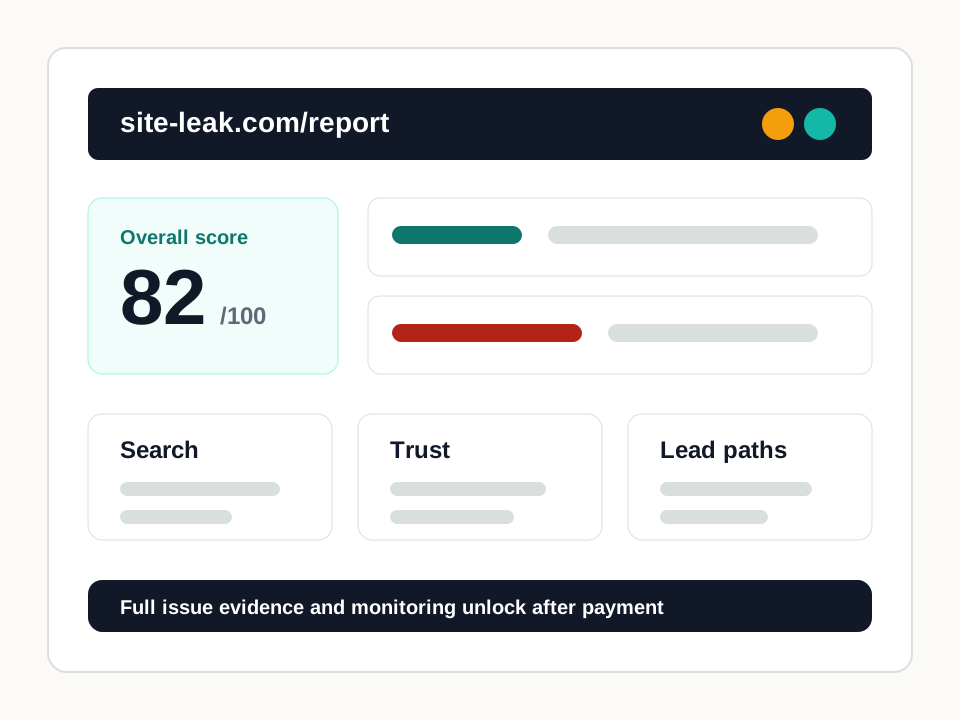
Pages and actions this check reviews
Contact alternatives such as phone, email, booking, quote, request, and service CTAs
Broken contact-page, confirmation, request, or thank-you links visible from public pages
Mobile first-screen evidence when the contact path is hidden below the first viewport
Fix Packet evidence for page to fix, priority, source summary, fix note, and retest step
Checklist item one: can the visitor move forward?
The most urgent form blocker is a disabled, hidden, or missing submit action. A visitor should not have to guess whether a form can be sent.
Checklist item two: can the business follow up?
A form that lacks a clear name, phone, email, or message field can create a dead end even when the page appears to contain a form.
Checklist item three: can the fix be retested?
A useful fix ends with a repeatable check: scan the same public URL and confirm the evidence changed without submitting customer data.
What this page helps you decide
Use this page when the buyer wants a practical checklist for contact form failures and a scan-backed way to prove which form path needs repair.
Practical fixes after the scan
Restore or reveal the submit button where visitors complete the form.
Add clearly labeled name, email, phone, and message fields when follow-up evidence is missing.
Repair broken contact, confirmation, quote, request, booking, or thank-you links tied to the form path.
Check the mobile version because form buttons and sticky CTAs often disappear after template edits.
Rerun the scan when form plugins, CRM embeds, or spam-protection scripts change outside normal releases.
Evidence examples
conversion.form_submit_disabledHigh priority
Submit button appears disabled near the contact path
Static form evidence or public page details indicates the public form exposes fields but not a usable submit action.
Fix: Repair form state logic, plugin settings, or required-field rules, then scan the same public URL again.
conversion.form_missing_contact_fieldMedium priority
Form lacks a clear way to identify the visitor
The collected form evidence does not identify an email, phone, name, message, or contact field.
Fix: Add and label a follow-up field so the business can respond when a real request arrives.
reliability.broken_linkHigh priority
Contact-related link points to a missing destination
A public link tied to contact, request, quote, or confirmation flow returns an error during sampled checks.
Fix: Restore the destination or redirect the old path to the current contact route.
Fix Packet
Pay only when the scan finds a clear issue.
The free scan is the decision point. If the result matters, the Fix Packet adds the exact affected path, fix brief, owner and technical PDFs, and retest checklist.
Questions this scan can answer
Will SiteLeak send a test message through the form?
No. It checks public form structure and public page details without submitting forms or creating test leads.
Is this only for contact pages?
No. It also applies to quote forms, request forms, consultation forms, booking forms, and service inquiry forms.
When is the Fix Packet useful?
Use the Fix Packet when you need every page to fix, priority, what SiteLeak found, and copy-ready repair note.