
Appointment, schedule, patient form, contact, phone, insurance, and request links visible on public pages
Dental appointments
Check whether patients can request an appointment from public pages.
Dental practice websites often depend on a small set of high-intent paths: request appointment, patient forms, insurance questions, phone calls, and contact pages. The site can look trustworthy while a form submit action is hidden, a booking link points to an old provider, or a patient form path returns an error. SiteLeak checks public evidence and keeps the result grounded in pages the practice can retest.
Reviewed scan evidence
- Sample
- 180 dental practice scans
- Repair-ready
- 9/180 scans
- Review-only
- 39/180 scans
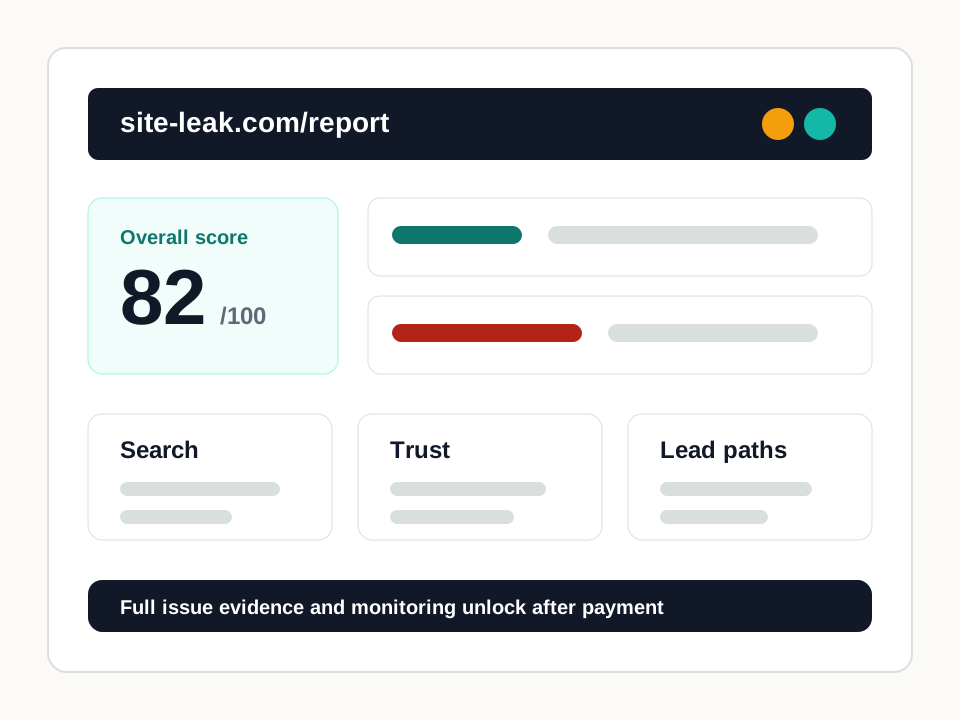
Pages and actions this check reviews
Form fields, submit actions, disabled states, labels, and contact-field signals without submitting forms
Broken booking, patient form, contact, and service links from public pages
Mobile first-screen evidence for call, appointment, form, and contact actions when available
Repair brief details that can go to the site editor, practice manager, or dental marketing vendor
Appointment paths need clear evidence
A practice owner does not need a technical scanner explanation first. They need to know whether a patient can reach the appointment or contact path and what page should be fixed.
Healthcare boundaries stay explicit
SiteLeak checks public website evidence only. It does not submit patient data, assess HIPAA compliance, enter portals, or review clinical claims.
Best first use
Use the free scan on the appointment or contact path. Buy the report only if the preview finds a concrete blocker worth handing to the website maintainer.
What this page helps you decide
Use this page when a dental practice wants to verify appointment request, patient form, contact, phone, and mobile action paths.
Practical fixes after the scan
Repair broken appointment and patient-form destinations before editing general page copy.
Restore visible submit actions and clear follow-up fields on request forms.
Add tap-to-call links where visible phone numbers are intended to drive appointment calls.
Rerun the scan after form, portal, widget, call-tracking, or campaign-page changes.
Start retesting when vendors or staff edit forms and appointment pages frequently.
Evidence examples
conversion.customer_path_unreachable.formHigh priority
Patient form path returns an error
A public patient or appointment form path is classified as a customer path and does not load successfully.
Fix: Restore the form route or redirect the old patient-form URL to the current request page.
conversion.form_submit_disabledHigh priority
Appointment form submit action appears disabled
Public form evidence indicates fields are present, but the submit action appears unavailable or disabled.
Fix: Repair the form state, required-field logic, or widget script, then retest without submitting patient data.
conversion.phone_number_not_clickableHigh priority
Appointment phone number is visible but not tappable
The public page shows a phone number, but the scan does not find a matching tap-to-call link.
Fix: Wrap the appointment number in a tel: link and confirm it appears in the mobile contact area.
Scan evidence
What recent public scans showed
Dental pages showed fewer broad blockers than restaurants, but the repair-ready cases are easier for a practice owner to understand: appointment forms, patient form paths, phone links, and contact pages.
- Sample
- 180 dental practice scans
- Repair-ready
- 9/180 scans
- Review-only
- 39/180 scans
- Appointment and patient-form paths are more valuable than generic title or security-header findings.
- Static form findings should stay cautious unless evidence shows a concrete broken path or disabled submit state.
- Tap-to-call and contact-path evidence is easier for office staff to verify after a fix.
- Healthcare compliance claims are excluded because the scanner checks public website paths only.
The scan does not submit patient forms or assess privacy, medical, or legal compliance.
Fix Packet
Pay only when the scan finds a clear issue.
The free scan is the decision point. If the result matters, the Fix Packet adds the exact affected path, fix brief, owner and technical PDFs, and retest checklist.
Questions this scan can answer
Will SiteLeak submit a patient appointment request?
No. It checks public form and link evidence without submitting patient information or creating appointments.
Does this check HIPAA compliance?
No. It checks public customer-path evidence only and does not assess legal, medical, or privacy compliance.
What should a dental practice fix first?
Start with broken appointment links, unreachable patient forms, missing mobile call paths, and disabled or incomplete contact forms.