
Mobile first-screen evidence for call, contact, booking, quote, order, cart, and checkout actions
Free tool
Check whether the mobile page shows a real customer path.
A mobile page can load correctly and still lose intent when the call, contact, booking, quote, order, or checkout action is buried too far down the page. SiteLeak checks the public mobile page for visible actions, then ties the finding to the page and retest steps instead of vague design commentary.
Reviewed scan evidence
- Evidence source
- Broad 985-target local-business rerun
- Best fit
- High-intent public paths customers use to act
- Retest fit
- Pages, widgets, providers, or campaigns that change often
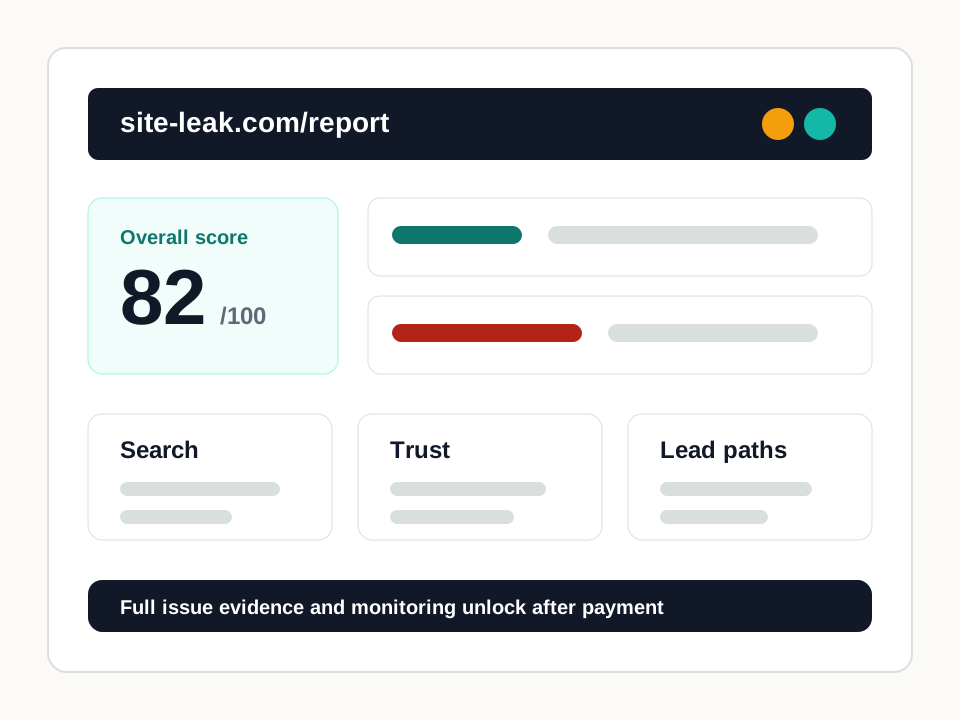
Pages and actions this check reviews
CTA labels, links, buttons, and form signals found in public page evidence
Visible page details from the public scan
Broken action links that make a visible CTA fail after the click
Retest-ready comparison when mobile action evidence changes between runs
Why mobile CTA evidence matters
Visitors on mobile usually arrive with a task. If the first screen does not expose a relevant action, the issue is easier to fix when the report names the page, evidence, priority, and next retest.
Not a design taste test
The checker does not grade style preferences. It looks for public evidence that a customer path is visible and reachable from the page.
Where retesting adds value
Mobile action bars, page-builder sections, chat tools, and form widgets can shift after edits. Retesting checks whether the same customer path still exposes a usable action later.
What this page helps you decide
Use this page when the buyer wants to know whether a mobile visitor can quickly find the action that creates a call, booking, quote, order, or purchase path.
Practical fixes after the scan
Move the primary customer path closer to the top of the mobile page when first-screen evidence is weak.
Make CTA text specific to the action: call, book, reserve, request quote, order, contact, cart, or checkout.
Repair visible CTAs that point to missing or outdated destinations.
Rerun the scan after hero, sticky bar, menu, form, or page-builder changes.
Rerun the scan to catch mobile CTA future breaks after templates, widgets, or campaigns change.
Evidence examples
conversion.no_above_fold_ctaMedium priority
No customer path appears in the first mobile screen
Browser evidence does not find a visible call, contact, booking, quote, order, cart, checkout, or form action above the mobile fold.
Fix: Move the primary customer path into the first mobile screen and retest the page.
checkout.broken_order_linkHigh priority
Visible order action leads to a broken destination
The public order CTA is classified as a customer path and returns an error during the link check.
Fix: Update the order destination or redirect to the active provider, then retest from mobile.
conversion.no_contact_pathHigh priority
Mobile service page has no clear contact path
The scanned page lacks phone, email, contact, booking, quote, order, checkout, or form signals in public evidence.
Fix: Add a clear contact, call, booking, quote, or order action near the service content and confirm it is visible on mobile.
Scan evidence
What recent public scans showed
A strict public-page rerun found a small but real group of sites with strong customer-path blockers, plus a larger group where repeat retesting is the better fit. This is a broad benchmark, not a tool-specific conversion rate.
- Evidence source
- Broad 985-target local-business rerun
- Best fit
- High-intent public paths customers use to act
- Retest fit
- Pages, widgets, providers, or campaigns that change often
- Confirmed issues clustered around booking, contact, phone, form, order, menu, quote, service, and location paths.
- Malformed script/template URLs are filtered before evidence is used as a paid-report reason.
- Third-party profiles and chain location pages are treated cautiously before purchase prompts.
- Browser-only mobile findings still require browser evidence before they become strong paid blockers.
The rerun used public-page checks at scale, then removed residual hard-noise targets. Tool pages use this only as broad context unless a narrower sample is shown.
Fix Packet
Pay only when the scan finds a clear issue.
The free scan is the decision point. If the result matters, the Fix Packet adds the exact affected path, fix brief, owner and technical PDFs, and retest checklist.
Questions this scan can answer
Does this score visual design quality?
No. It focuses on whether public mobile evidence shows a clear customer path and whether that action has a working path.
What actions does SiteLeak look for?
The scanner looks for contact, call, booking, reservation, quote, order, cart, checkout, email, and form signals that a customer can use.
Does a hidden CTA always mean the page is broken?
No. It means the scan found no obvious first-screen action. The Fix Packet gives context, the page to review, and retest steps so the owner can decide what to change.