
Treatment-page links, booking CTAs, consultation forms, call actions, and contact paths visible on public pages
Med spa tool
Check whether treatment pages give visitors a clear consultation path.
Treatment pages can bring in high-intent med spa visitors, but many stop at information. A Botox, laser, filler, facial, or body contouring page can explain the service while missing a visible consultation action, linking to an old scheduler, or hiding the mobile CTA below galleries and FAQs. SiteLeak checks the public action path around treatment pages and packages concrete findings for the site editor when the free preview finds something worth fixing.
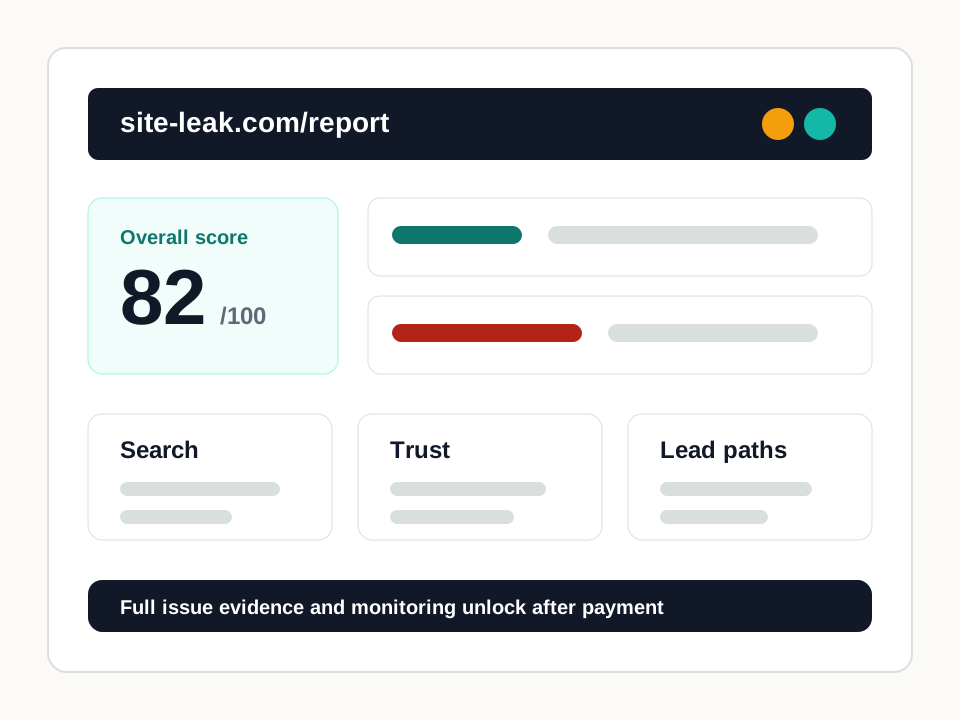
Visitor paths this page checks
Pages that describe services but lack phone, email, booking, consultation, or form signals
Broken scheduler, gallery, campaign, and service-page links that can interrupt treatment research
Mobile first-screen CTA evidence for consultation and booking actions when public evidence supports it
Report sections that prioritize treatment-page action blockers ahead of broad SEO or style comments
Treatment pages need action evidence
A treatment page can be informative and still fail the next step. The scan looks for public evidence that a visitor can move from service interest to consultation, call, contact, or booking.
Why this is not generic SEO
The page does not promise rankings or judge medical claims. It focuses on whether public service pages expose a usable visitor path that can be repaired and retested.
Best place to scan first
Start with the treatment page used in ads, social posts, or organic search. Those pages often receive visitors who need a next step more than another general website score.
What this page helps you decide
Use this page when a med spa wants to check public treatment pages for missing consultation actions, broken booking paths, and mobile CTA gaps.
Practical fixes after the scan
Add a visible consultation, booking, call, or contact action near high-intent treatment content.
Repair old scheduler or campaign links used by service pages.
Move the primary CTA higher on mobile pages where galleries or FAQs push the action down.
Rerun the scan after service, gallery, campaign, or page-builder changes.
Use monitoring when treatment pages are updated for promotions, new services, or provider changes.
Evidence examples
conversion.no_contact_pathHigh priority
Treatment page has no consultation or booking path
The scanned public page lacks phone, email, contact, booking, consultation, or form signals around the treatment content.
Fix: Add a clear consultation or booking action near the service content and retest the live page.
checkout.broken_booking_linkHigh priority
Treatment-page booking CTA opens a missing scheduler route
The booking link is classified as an appointment path and returns an error during public link checks.
Fix: Point the treatment-page CTA to the current scheduler or add a redirect from the old booking route.
conversion.no_above_fold_ctaMedium priority
Mobile treatment page buries the next step below service content
Browser evidence does not find a visible booking, contact, call, form, or consultation action in the first mobile viewport.
Fix: Move a consultation or booking action into the first mobile screen and rerun the scan.
Paid access
Use paid access when the scan finds a repair-ready issue.
The free scan is the decision point. If the result matters, the Fix Packet adds the exact affected path, repair brief, owner and technical PDFs, and retest checklist.
Questions this scan can answer
Does SiteLeak review treatment claims?
No. It checks public website paths only. Treatment claim, medical, advertising, or compliance review is outside the scanner.
What is a treatment-page CTA issue?
Examples include no consultation path, a dead booking link, a hidden mobile CTA, non-clickable phone evidence, or a form that appears unavailable.
Should every treatment page have the same CTA?
Not necessarily. The useful test is whether the page provides a clear next step that matches its visitor intent.