
Reservation, table, OpenTable, Resy, contact, phone, location, and private-event links
Restaurant reservations
Check the reservation path before guests try to book a table.
A restaurant reservation path can fail even when the homepage looks fine. Common causes include old OpenTable or Resy links, location-specific booking pages, missing mobile actions, event pages with no contact path, or homepage buttons that were copied from another location. SiteLeak checks public reservation, table, call, contact, location, and form evidence without creating a booking.
Reviewed scan evidence
- Sample
- 220 restaurant scans
- Repair-ready
- 20/220 scans
- Review-only
- 66/220 scans
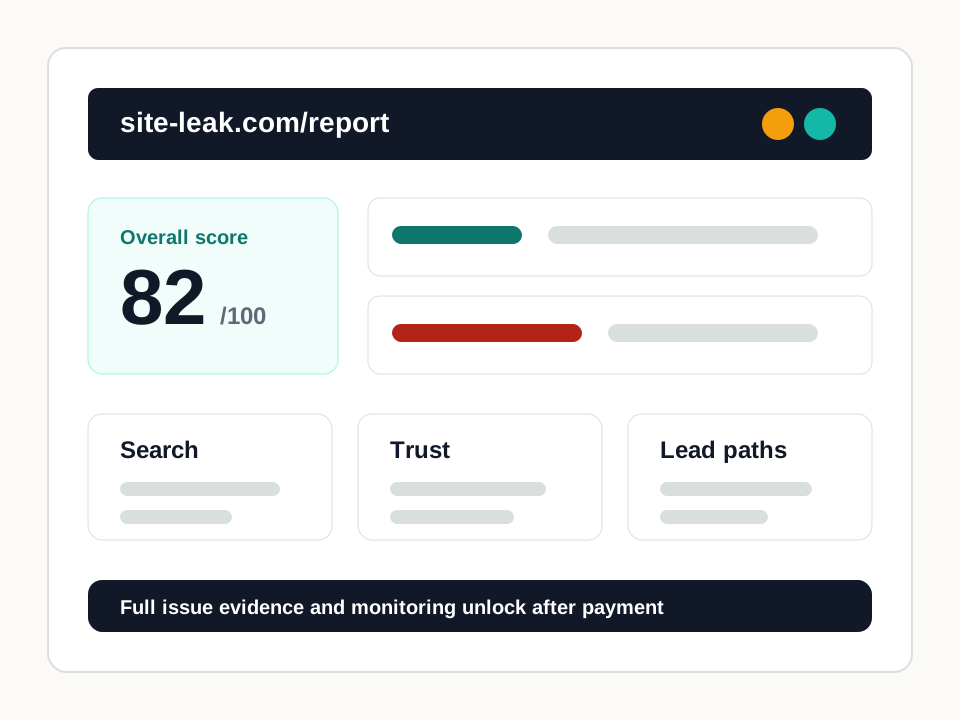
Pages and actions this check reviews
Broken reservation destinations from homepage, location, menu, and event pages
Mobile first-screen evidence for reserve, call, location, and contact actions when available
Public form signals for private dining, event, catering, or group reservation paths
Repair notes that can be sent to the website editor or reservation-provider owner
Reservation links are high-intent
A guest who clicks reserve is already taking action. If that path fails, broad SEO advice is less useful than a precise repair note with the affected URL.
Provider checks stay public
SiteLeak checks public links and response evidence. It does not reserve tables, submit guest details, bypass provider flows, or test private restaurant systems.
Why retest matters
After a reservation link is fixed, the useful next step is a repeatable public scan that proves the old evidence changed.
What this page helps you decide
Use this page when a restaurant wants to verify public reservation, table-booking, private-event, location, and mobile call paths.
Practical fixes after the scan
Replace old OpenTable, Resy, or provider URLs with the current public reservation path.
Repair dead location reservation links before promoting the location page.
Add a visible call or contact option near private dining and event content.
Move reserve or call actions into the first mobile screen when guests are likely to act from a phone.
Rerun the scan after provider, CMS, menu, or location-page changes.
Evidence examples
checkout.external_booking_link_unreachableHigh priority
External reservation provider link cannot be reached
A public reservation CTA points to an external provider URL that fails a safe reachability check.
Fix: Update the reservation provider destination and retest from the same public page.
conversion.customer_path_unreachable.reservationHigh priority
Reservation path returns an error
A linked reservation path from the public restaurant site returns a missing-page or server-error response.
Fix: Restore the reservation page or redirect the old route to the current booking path.
conversion.no_contact_pathHigh priority
Private-event page has no reservation or contact path
The page evidence lacks phone, email, reservation, contact, quote, or form signals near the event content.
Fix: Add a clear private-event contact or reservation action and rerun the scan.
Scan evidence
What recent public scans showed
Restaurant scans produced the strongest broad-volume signal in the strict rerun, but the useful cases were specific: order, menu, reservation, contact, and location paths. The page is written for those concrete checks rather than general restaurant SEO.
- Sample
- 220 restaurant scans
- Repair-ready
- 20/220 scans
- Review-only
- 66/220 scans
- Order, menu, reservation, and contact path failures appeared often enough to justify exact restaurant tool pages.
- Provider links need stricter parsing because restaurants commonly embed escaped ordering and reservation URLs.
- Retesting is relevant when menus, hours, providers, and location pages change after launch.
- Chain and hosted location pages are not treated the same as owner-controlled restaurant domains.
Counts are conservative after removing malformed-link cases from the repair-ready group.
Fix Packet
Pay only when the scan finds a clear issue.
The free scan is the decision point. If the result matters, the Fix Packet adds the exact affected path, fix brief, owner and technical PDFs, and retest checklist.
Questions this scan can answer
Does SiteLeak make a reservation?
No. The scan checks public reservation paths and does not create bookings or submit guest information.
Can it check OpenTable or Resy links?
It can check public links to reservation providers from the site. It does not log into provider dashboards or complete reservation flows.
When should reservations be monitored?
Rerun the scan when location pages, event pages, provider widgets, or staff-edited pages change often.