
Book Now, appointment-provider, service-page, phone, and contact links visible on public pages
Salons and spas
Check whether salon and spa visitors can still book from public pages.
Salon and spa websites depend on service pages, Book Now buttons, phone taps, appointment forms, and third-party scheduling links. A site can look polished while a booking provider URL expires, a form submit action stays disabled, or a mobile service page hides the next step. SiteLeak checks public evidence for those appointment paths and turns the result into a paid report or monitoring reference without creating appointments or submitting forms.
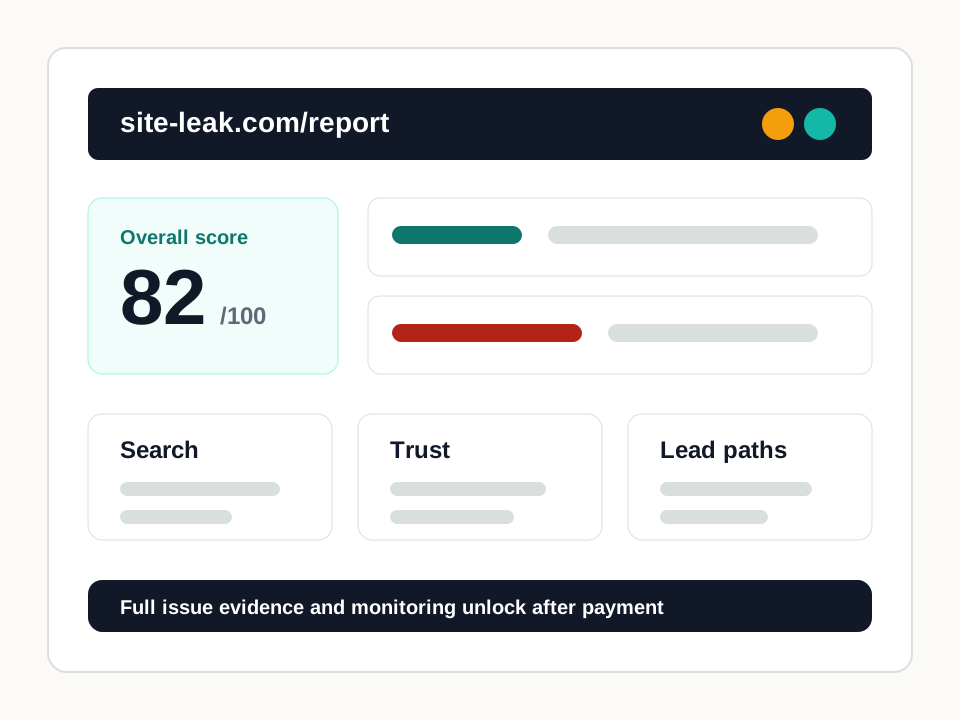
Pages and actions this check reviews
Appointment forms with submit actions, contact fields, disabled states, labels, and action targets
Mobile first-screen CTA evidence for booking, call, service, and contact paths when public evidence supports it
Broken same-domain links that can interrupt service browsing or appointment requests
Public scanner boundaries that avoid booking creation, form submission, calls, and private scheduling systems
Why salons and spas fit
Salon and spa visitors usually take the same kind of next step: choose a service, tap Book Now, open a scheduler, or call from mobile. That makes broken appointment paths easy to inspect and fix.
What gets fixed first
Prioritize broken booking-provider destinations, disabled appointment forms, covered mobile CTAs, and service pages with no next step before broad SEO or design polish.
How monitoring fits
Weekly monitoring is most useful after booking widgets, campaign pages, service menus, or page-builder templates change because those edits can break public appointment paths quietly.
What this page helps you decide
Use this page when a salon or spa wants to verify that public appointment paths still work before sending visitors to service pages or booking widgets.
Practical fixes after the scan
Repair dead Book Now links before spending time on lower-risk page cleanup.
Move booking, call, or contact actions into the first mobile screen on priority service pages.
Review appointment forms for visible submit actions, contact fields, labels, and disabled states.
Rerun the scan after scheduler-provider, service-menu, page-builder, or campaign edits.
Start weekly monitoring after the first repair when appointment providers or CMS pages change often.
Evidence examples
checkout.broken_booking_linkHigh priority
Book Now link leads to an old appointment provider
The public booking CTA is classified as an appointment path and returns an error during sampled link checks.
Fix: Replace the old provider URL with the current booking destination and retest the public path.
conversion.form_submit_disabledHigh priority
Appointment form submit action appears disabled
The form evidence shows appointment fields, but the submit action appears disabled or unavailable in the public page evidence.
Fix: Repair the form state logic and confirm the public appointment path exposes a usable submit action.
conversion.no_above_fold_ctaMedium priority
Mobile service page hides the booking action
Public page details does not show a visible booking, call, contact, or form action in the first screen.
Fix: Move the booking or call action near the top of the mobile service page and rerun the scan.
Paid report
Pay only when the scan finds a clear issue.
The free scan is the decision point. If the result matters, the paid report adds the exact affected path, fix brief, owner and technical PDFs, and retest checklist.
Questions this scan can answer
Will SiteLeak create a salon or spa appointment?
No. SiteLeak checks public evidence such as links, forms, CTAs, and browser signals without creating appointments or submitting customer information.
How is this different from a broad site check?
It focuses on public appointment paths: Book Now links, mobile CTAs, phone taps, service pages, and forms. Design, SEO, and speed issues stay secondary unless they block booking.
What should I scan first?
Start with the public homepage or a high-value service page that should lead to booking, then inspect the booking, form, phone, and mobile CTA evidence.