
Broken forms, booking links, quote paths, order links, menu links, phone CTAs, and mobile customer paths
Agency monitoring
A lightweight QA layer for agencies managing local business websites.
Agencies often inherit the same maintenance problem across many client sites: forms break after plugin updates, booking links change, phone numbers move, menus expire, quote pages get renamed, and mobile CTAs disappear after page-builder edits. SiteLeak is not an agency work queue. It is a public page scanner and monitoring layer that creates evidence a client or site editor can act on without a manual review project.
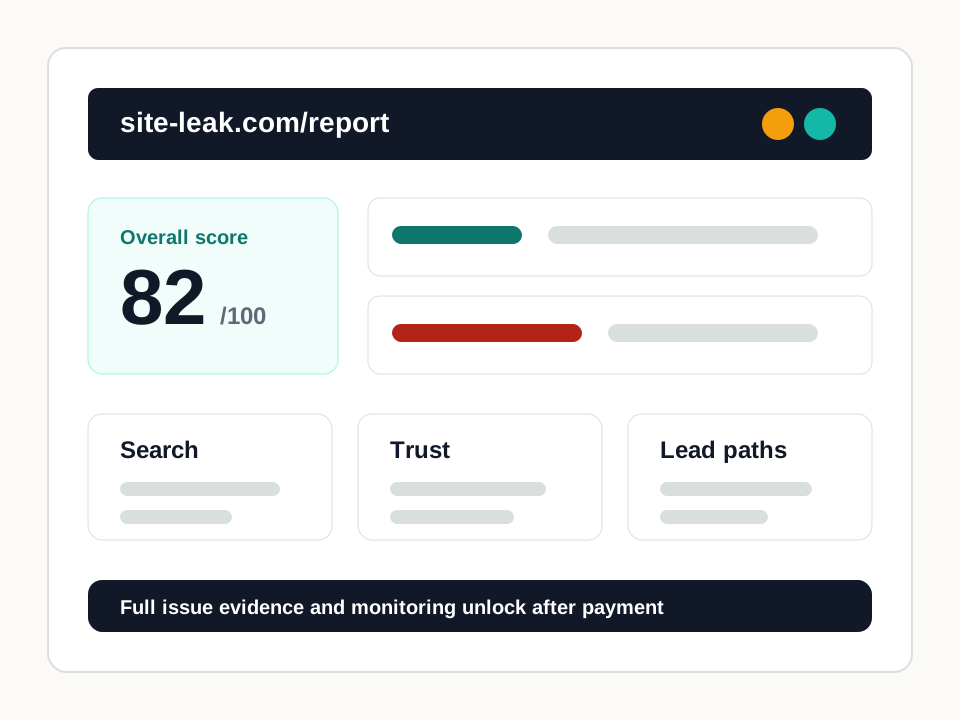
Pages and actions this check reviews
Client-ready details including page to fix, issue ID, priority, what SiteLeak found, fix note, and retest step
Retesting for public paths that change after CMS, plugin, provider, or campaign updates
Industry-specific pages and sample reports for local-service, restaurant, wellness, real estate, dental, legal, and contractor clients
Account, report, billing, monitoring, and cancellation paths without onboarding calls
What agencies can productize
A repeatable scan is easier to sell and support than one-off manual QA. The client gets concrete details, and the agency gets a consistent path to fix and retest public issues.
What SiteLeak should not become
SiteLeak does not assign designers, developers, or account managers. It provides what SiteLeak found, report access, and monitoring so the buyer can decide what to fix.
Where retesting fits
Retesting is useful after publishing site changes, before campaigns, and after provider changes because it catches broken customer paths without asking someone to manually click every form and button.
What this page helps you decide
Use this page when an agency manages local business websites and wants recurring checks for public forms, booking links, phone CTAs, and key pages without building custom scripts for each client.
Practical fixes after the scan
Use the report to prioritize broken forms, booking links, phone CTAs, quote paths, menus, and service-page contact paths.
Send the page to fix and fix note to the person editing the client site.
Rerun the scan after publishing so the report shows fixed, remaining, or changed evidence.
Use retesting for clients with frequent edits, seasonal campaigns, provider widgets, call tracking, or changing menus.
Keep agency delivery productized by selling the report and monitoring value instead of manual custom review.
Evidence examples
monitoring.issue_worsenedHigh priority
Client booking path gets worse after an update
A recurring run finds a new high-priority booking issue that was not present in the previous reference scan.
Fix: Review the page to fix, repair the changed link or widget, and rerun the scan after publishing.
checkout.broken_quote_linkHigh priority
Quote CTA on a client service page returns an error
The public quote CTA is classified as a customer path and returns an error during sampled link checks.
Fix: Point the CTA to the active quote form or add a redirect from the old request path.
conversion.phone_number_not_clickableHigh priority
Client phone number is visible but not tappable
A public service page shows a phone number in text, but the scan does not find a matching tel: link.
Fix: Add the tap-to-call link in the shared client template and retest affected pages.
Fix Packet
Pay only when the scan finds a clear issue.
The free scan is the decision point. If the result matters, the Fix Packet adds the exact affected path, fix brief, owner and technical PDFs, and retest checklist.
Questions this scan can answer
Can agencies use SiteLeak without booking a meeting?
Yes. The product path stays simple: scan, report, monitoring, dashboard, billing, and cancellation.
Does SiteLeak white-label reports?
Agency and white-label workflows can exist, but the core product should stay focused on scan, report, and monitoring value.
Does SiteLeak fix client websites automatically?
No. It reports what it found and gives repair notes. The agency, client, or site editor decides and performs the fix.