
Weekly checks for public booking, consultation, call, form, treatment-page, and campaign paths
Med spa monitoring
Monitor med spa booking paths after the first repair.
A one-time scan is useful when the med spa needs to know what is broken today. Monitoring is for the next change: a booking provider update, a new treatment campaign, a page-builder edit, a gallery script, a sticky CTA change, or a location-page update. SiteLeak weekly monitoring keeps checking the public booking paths and sends alerts when evidence appears, gets worse, or changes after the reference scan.
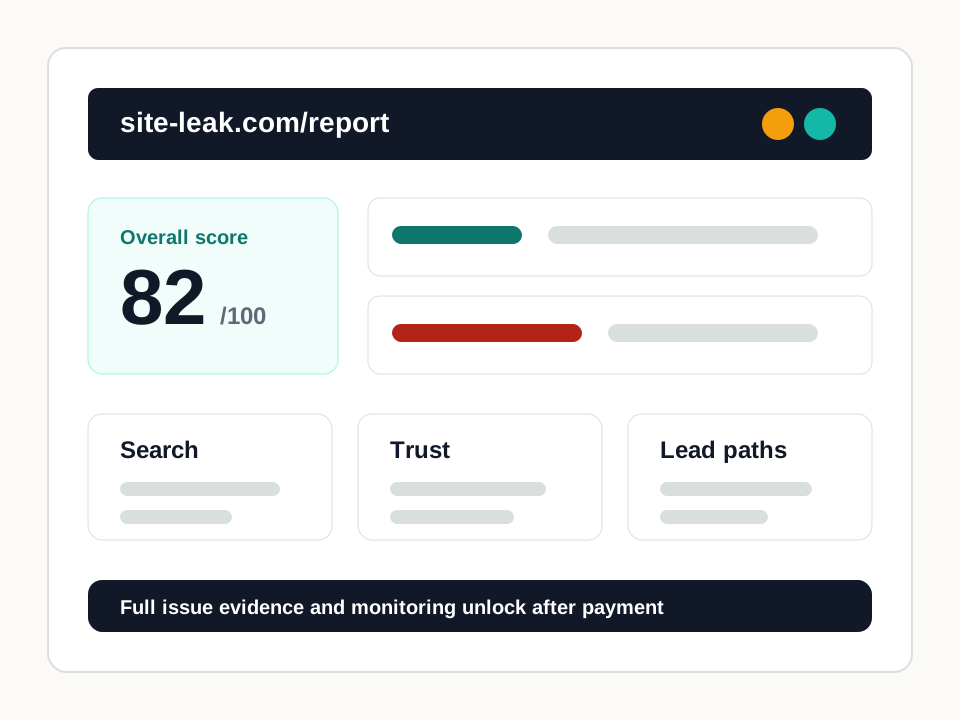
Visitor paths this page checks
Changed evidence for dead schedulers, broken links, hidden mobile CTAs, disabled forms, and missing contact paths
Before/after comparison after the Fix Packet so a later monitoring run can show what got worse
Email alert context with affected domain, issue summary, report link, and preferences link
Public-path boundaries that avoid form submission, appointment creation, private dashboards, and internal targets
Monitoring is the product, not an afterthought
The Fix Packet helps repair the current issue. Monitoring protects the same public paths after routine med spa changes create new or returning blockers.
Best timing for a subscription
Start monitoring after the first scan finds meaningful evidence or after a booking-provider, CMS, campaign, form, or mobile template change makes the site harder to test manually.
Why this page can convert paid intent
Someone searching for med spa booking path monitoring already understands recurring risk. The page should make weekly checks feel practical, bounded, and tied to the evidence the scan can prove.
What this page helps you decide
Use this page when a med spa wants recurring checks for booking, consultation, form, call, and treatment-page paths after the first scan or repair.
Practical fixes after the scan
Use the first report to establish the affected booking, consultation, form, and mobile paths worth watching.
Repair critical booking blockers and retest the public page before relying on monitoring alerts for future changes.
Route monitoring alerts to the site editor, practice manager, or provider owner who can act on them.
Review alerts when booking providers, campaigns, forms, galleries, sticky bars, or treatment pages change.
Keep monitoring handled through the dashboard, billing controls, and preferences path.
Evidence examples
monitoring.issue_worsenedHigh priority
Weekly scan sees a new med spa booking blocker
A later monitoring run finds a high-priority booking issue that was not present in the prior public reference scan.
Fix: Open the affected report, repair the changed booking path, and rerun the scan after publishing.
checkout.broken_booking_linkHigh priority
Booking provider link breaks after a widget update
The monitored booking CTA now resolves to an error instead of the destination captured in the earlier reference scan.
Fix: Update the provider URL or restore the widget route, then let the next monitoring run confirm the change.
conversion.no_above_fold_ctaMedium priority
Mobile consultation action disappears after a page edit
Browser evidence no longer finds a visible booking, consultation, call, contact, or form action in the first mobile viewport.
Fix: Restore the mobile CTA placement and rerun the public scan to create a clean reference scan.
Paid access
Use paid access when the scan finds a repair-ready issue.
The free scan is the decision point. If the result matters, the Fix Packet adds the exact affected path, repair brief, owner and technical PDFs, and retest checklist.
Questions this scan can answer
What does weekly med spa monitoring check?
It reruns public checks for booking, consultation, call, form, treatment-page, and mobile visitor-path evidence tied to the monitored report.
Does monitoring submit forms or create bookings?
No. Monitoring does not create appointments, submit forms, open private dashboards, or scan internal targets; it repeats public checks that can be retested.
When is daily monitoring worth it?
Use daily checks only when booking paths change frequently, such as active campaigns, provider migrations, or high-change multi-location sites.