
Booking widget links, scheduler provider destinations, appointment iframe or script clues, and public action paths
Med spa tool
Check the public booking widget before patients reach a dead appointment path.
Booking widgets are convenient until they fail in a way the med spa team does not see. A provider script can change, a widget route can expire, a location-specific scheduler can be removed, or a mobile page can show treatment content without a working path into the widget. SiteLeak stays on public pages, checks observable booking-widget signals, and gives focused repair tickets when the evidence is strong enough to justify payment.
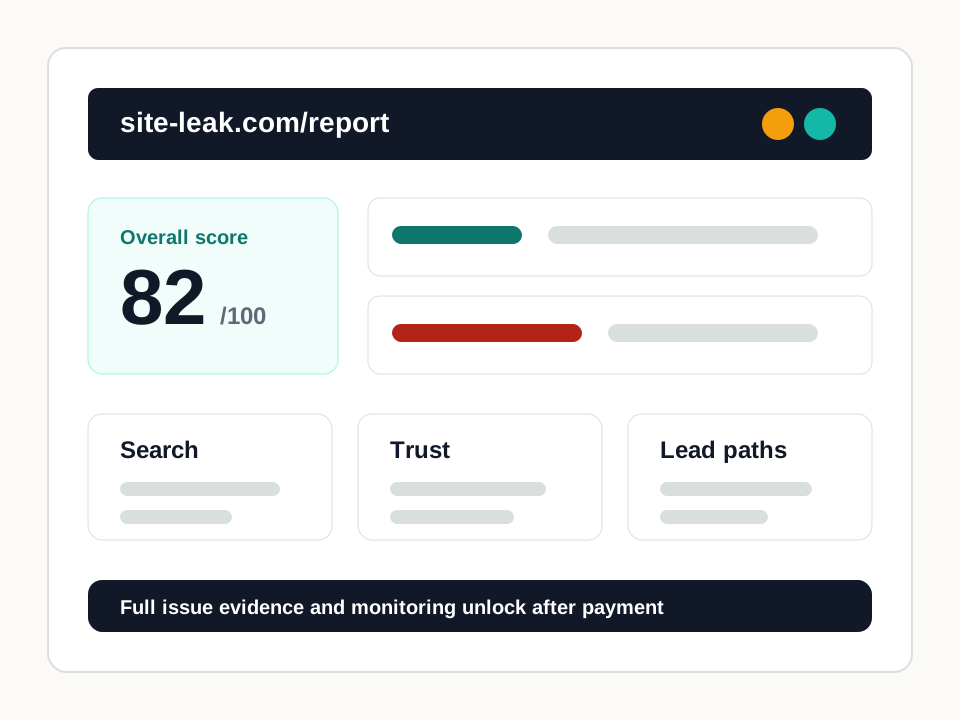
Visitor paths this page checks
Provider-error, broken-link, redirect, final URL, and unavailable-destination evidence from public checks
Mobile evidence for widget-adjacent Book Now, consultation, call, and contact actions
Treatment, location, staff, campaign, and gallery pages that point into the booking widget
Monitoring-ready reference details for widgets that change after provider or CMS updates
Widget checks need careful boundaries
SiteLeak can inspect public widget paths and link evidence, but it does not log into providers, choose appointment times, submit patient details, or bypass private workflows.
Why this page has acquisition value
A med spa searching for a booking widget checker likely has a concrete operational concern. The page turns that concern into a scan and paid repair tickets when evidence exists.
Monitoring is the natural upsell
Widget-based booking paths are exactly the kind of site element that can change after provider updates. Weekly checks make more sense than a one-time report when the provider owns part of the flow.
What this page helps you decide
Use this page when a med spa relies on an embedded or linked booking widget and wants public evidence before asking a provider or site editor to repair it.
Practical fixes after the scan
Replace inactive provider URLs with the current booking widget or scheduler destination.
Add a backup consultation, call, or contact path when the widget is not visible on mobile.
Repair treatment, campaign, and location links that point to removed widget routes.
Rerun the scan after provider, embed, or page-template changes.
Use weekly monitoring when the widget provider or CMS changes outside one controlled release.
Evidence examples
checkout.broken_booking_linkHigh priority
Booking widget entry link returns a provider error
The public booking CTA resolves to a scheduler-like provider destination that does not load successfully during checks.
Fix: Replace the destination with the active provider URL or restore the widget route, then retest.
conversion.no_above_fold_ctaMedium priority
Mobile page does not expose a widget or backup booking path
Browser evidence does not find a visible booking, consultation, call, contact, or form action in the first mobile screen.
Fix: Add the widget entry point or a backup consultation CTA where mobile visitors can reach it quickly.
reliability.broken_linkHigh priority
Location page points to a removed booking-widget route
A sampled link from a public med spa page resolves to a missing same-domain booking-widget URL.
Fix: Redirect the removed route or update the location page to the current widget path.
Paid access
Use paid access when the scan finds a repair-ready issue.
The free scan is the decision point. If the result matters, the Fix Packet adds the exact affected path, repair brief, owner and technical PDFs, and retest checklist.
Questions this scan can answer
Can SiteLeak fully test my booking widget?
No. It checks public widget and booking-path evidence. It does not create appointments, log into providers, or complete private scheduler actions.
What widget evidence can be useful?
Useful evidence includes dead provider links, missing booking CTAs, mobile path gaps, broken treatment-page links, and public public-page issues around the booking area.
When should a widget path be monitored?
Monitor it when scheduler providers, embeds, location settings, campaign pages, or treatment-page CTAs change often.