
Location-page booking buttons, phone numbers, consultation forms, directions links, and contact paths visible to public visitors
Med spa tool
Check med spa location pages for the right booking path.
Multi-location med spas can leak bookings when every location page looks similar but points to a different phone number, scheduler, consultation form, or provider account. A visitor choosing the downtown location may reach a general booking page, an old suburb scheduler, or a contact form with no visible follow-up path. SiteLeak checks public location-page evidence and keeps the workflow simple: free scan for the strongest signals, Fix Packet for exact affected paths, and monitoring when location pages change often.
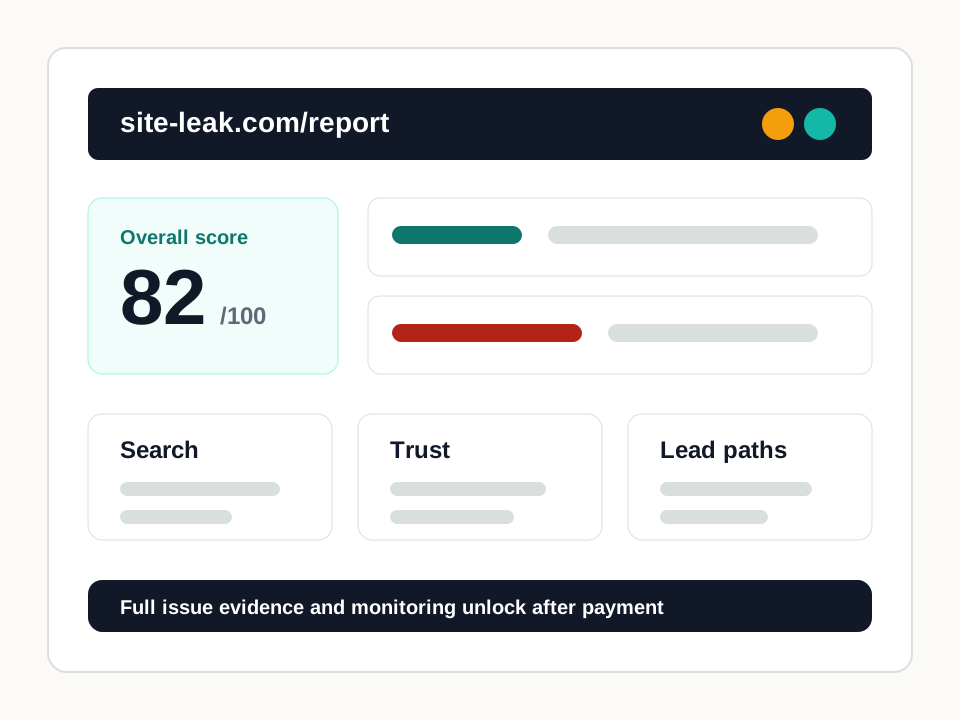
Visitor paths this page checks
Wrong-location scheduler links, old provider destinations, conflicting phone evidence, and missing location-specific CTAs
Mobile first-screen evidence for whether each location page gives visitors a usable next step
Broken location, booking, provider, contact, campaign, and service links that can interrupt a local visitor path
Fix Packet details for the exact location URL, observed destination, priority, repair note, and retest step
Location pages create routing risk
A med spa can have a working booking system and still send a location visitor to the wrong place when page templates, provider accounts, or call-tracking numbers drift apart.
The useful evidence is concrete
The report should show which location page was scanned, what destination was observed, which visitor action was affected, and what needs to be retested after the repair.
Monitoring fits multi-location changes
Location pages are often edited during staff changes, moves, promotions, and provider updates. Weekly checks can catch a new public booking-path issue after the first repair.
What this page helps you decide
Use this page when a med spa with multiple locations wants to check whether each public location page sends visitors to the right booking, call, contact, or consultation path.
Practical fixes after the scan
Replace wrong-location scheduler links with the destination that matches the public location page.
Label phone and booking actions clearly when multiple locations share a template.
Repair broken location, provider, contact, or campaign links tied to local booking paths.
Move location-specific call or consultation actions higher on mobile pages where first-screen evidence is weak.
Rerun the scan after location moves, provider account changes, call-tracking updates, or page-template edits.
Evidence examples
checkout.wrong_location_bookingHigh priority
Location page sends visitors to a different scheduler
The scanned location page exposes a booking destination that does not match the location path or local context on the page.
Fix: Update the location-page CTA to the correct scheduler destination and retest the public path.
conversion.conflicting_contact_pathMedium priority
Location page shows conflicting phone and consultation paths
Public evidence finds multiple location-sensitive contact actions near one page without clear labels for visitors.
Fix: Clarify location labels or separate the CTAs so each visitor can choose the right next step.
reliability.broken_linkHigh priority
Location booking link resolves to a removed provider route
A sampled booking-related link from the location page resolves to a missing or unavailable public destination.
Fix: Restore the provider route or redirect the old location booking URL to the current destination.
Paid access
Use paid access when the scan finds a repair-ready issue.
The free scan is the decision point. If the result matters, the Fix Packet adds the exact affected path, repair brief, owner and technical PDFs, and retest checklist.
Questions this scan can answer
Can SiteLeak verify which med spa location has appointment availability?
No. It does not enter private booking systems or reserve appointment times. It checks whether the public page points visitors toward the expected path.
What should a multi-location med spa scan first?
Start with the location hub, then scan the highest-traffic location page or the page used in local ads and map profiles.
When is this more than a generic broken-link check?
It becomes location-specific when the issue affects the page, phone number, scheduler, or consultation path a local visitor is expected to use.