
Old and new booking destinations visible in public CTAs, treatment pages, location pages, campaign pages, and widget links
Med spa tool
Check old med spa booking links after a scheduler migration.
Scheduler migrations create a quiet failure mode for med spas: the new booking provider works from the dashboard, but old public URLs remain across treatment pages, location pages, sticky buttons, campaign pages, email links, and profile-style landing pages. Patients can still reach a retired booking provider or a widget route that no longer loads. SiteLeak checks public scheduler-migration evidence, shows the strongest free signals first, and keeps paid access focused on exact affected paths, observed behavior, fix notes, and retest steps.
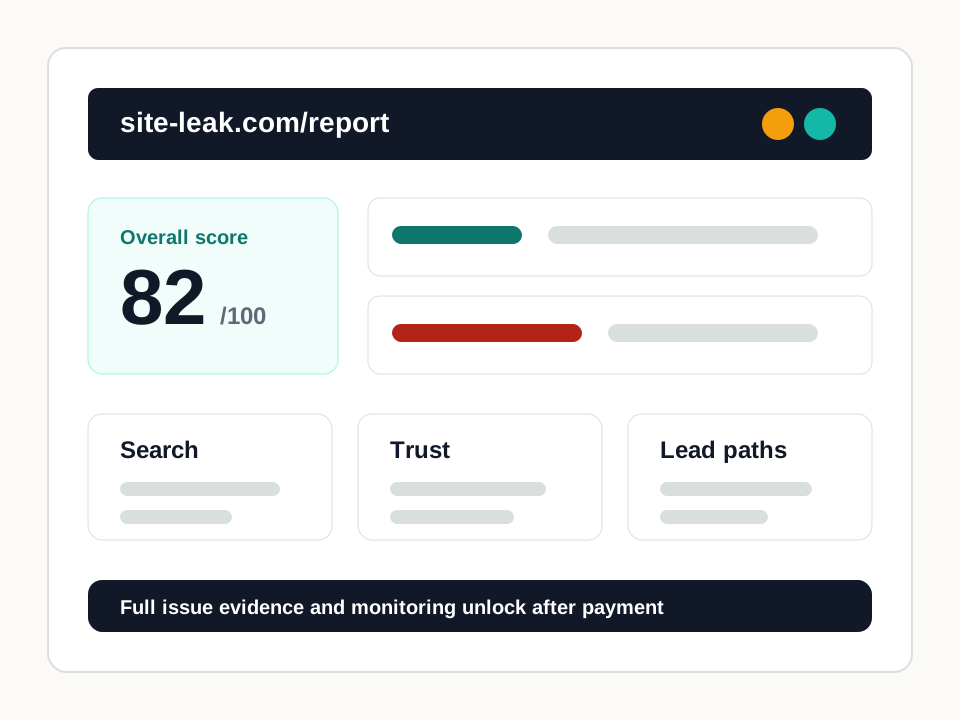
Visitor paths this page checks
Retired provider URLs, redirect chains, broken scheduler routes, dead appointment links, and unavailable widget evidence
Mobile evidence for booking, call, consultation, contact, and form alternatives when a scheduler path fails
Repair ticket rows that identify which public URL still points to the retired or incorrect booking destination
Monitoring context for the weeks after a migration, when stale links often reappear through templates or campaigns
Provider migrations leave public traces
A booking provider change can update the main button while old provider links remain in templates, service pages, campaigns, redirects, or location-specific pages that receive visitors later.
The scan does not need private scheduler access
SiteLeak does not log into booking systems, create appointments, hold slots, or test internal provider settings. It checks the public URLs and page evidence a visitor can reach.
Why this page can sell monitoring
Migration risk does not end after the first repair. Weekly checks make sense when old templates, ads, and location pages can put retired scheduler destinations back into the public path.
What this page helps you decide
Use this page when a med spa has changed booking providers and wants to find stale public scheduler links before visitors hit retired appointment paths.
Practical fixes after the scan
Replace retired provider URLs on headers, sticky bars, treatment pages, location pages, and campaign pages.
Redirect old booking routes to the current public scheduler destination when those routes still receive traffic.
Repair widget embeds or booking scripts that still load assets from the prior provider.
Add a backup consultation, call, or contact path while provider links are being cleaned up.
Rerun the scan after migration cleanup and start monitoring if multiple teams can reintroduce old links.
Evidence examples
checkout.old_scheduler_linkHigh priority
Treatment page still points to the retired scheduler provider
A public booking CTA from the scanned page resolves to an old provider destination instead of the current scheduler.
Fix: Replace the CTA destination with the current provider URL and retest the treatment-page booking path.
reliability.redirect_loopHigh priority
Old booking route redirects without reaching the new scheduler
A booking-related public URL enters a redirect chain that does not resolve to a usable appointment destination.
Fix: Update the redirect rule or route mapping so the old booking URL reaches the current scheduler.
conversion.no_contact_pathHigh priority
Scheduler migration left no backup consultation path
When the booking path fails, the public page does not expose phone, email, contact, consultation, or form signals nearby.
Fix: Add a backup call, contact, or consultation action while the scheduler migration cleanup is completed.
Paid access
Use paid access when the scan finds a repair-ready issue.
The free scan is the decision point. If the result matters, the Fix Packet adds the exact affected path, repair brief, owner and technical PDFs, and retest checklist.
Questions this scan can answer
Can SiteLeak confirm the new scheduler is configured correctly?
It can report public evidence from the pages and links it can safely check, but it does not access private scheduler settings or provider dashboards.
Which page should I scan after a scheduler migration?
Start with the public Book Now URL, then scan high-intent treatment, location, and campaign pages that may still contain old booking links.
Should migration checks be one-time or recurring?
Use a one-time Fix Packet for the current cleanup, then use monitoring if templates, campaign pages, or location pages keep changing after the migration.